
Blog
Strength Imbalances in Cyclists: The Training Fixes That Improve Power and Reduce Injury Risk

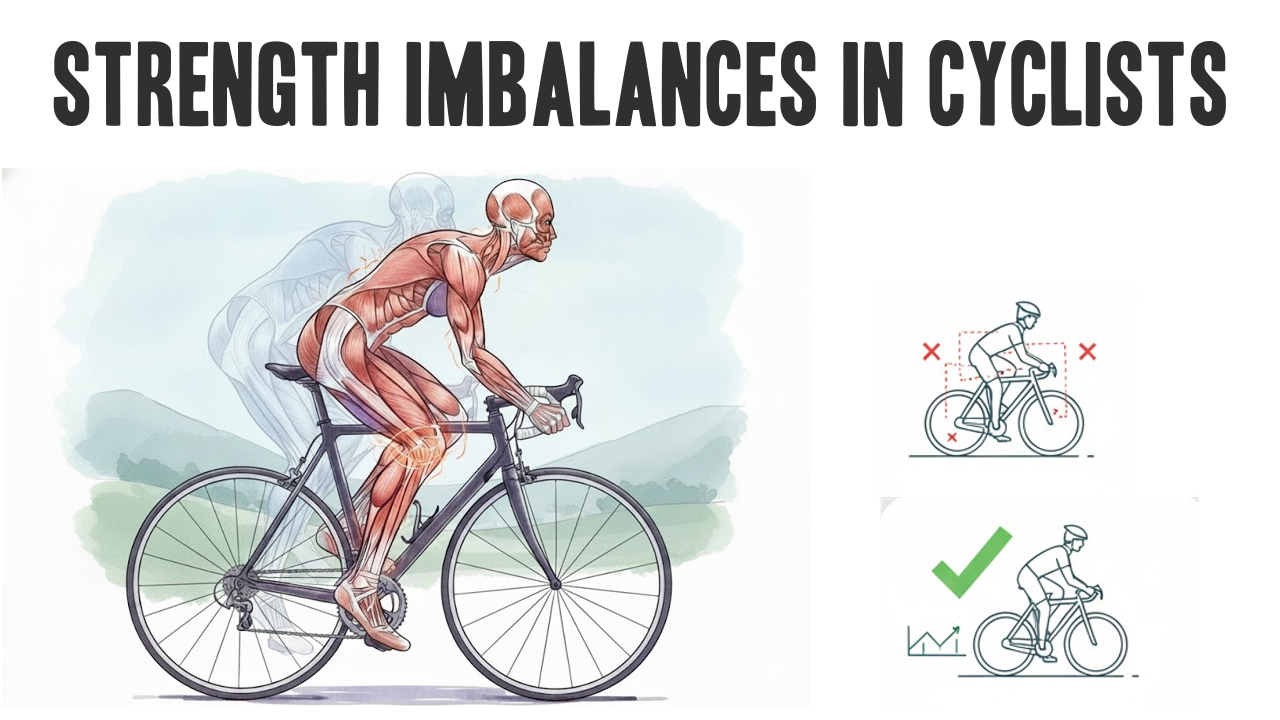
Introduction to Strength Imbalances in Cyclists
Cycling is a fantastic way to build endurance and leg strength, but the repetitive motion of pedaling can lead to uneven muscle development. As cyclists spend hours in the saddle, their bodies adapt to the demands of the sport, but some muscles may become overdeveloped while others lag behind. This can affect posture, force application, and overall riding comfort. If left unchecked, these imbalances can influence both performance and long-term resilience.
How Strength Imbalances Develop in Cyclists
Cycling relies on a limited range of motion, with the hips flexed and the torso leaning forward for extended periods. This repetitive motion can lead to strong quadriceps, but the muscles on the back of the hips and legs may not receive the same level of engagement. As a result, imbalances can develop, affecting the knees, hips, and lower back. The quadriceps handle much of the workload during each downstroke, but if the glutes and hamstrings cannot share the effort, the knees may take on more force than they can handle, leading to discomfort and inefficiency.
Extended time in a seated position can also cause the hip flexors to tighten, restricting hip extension and limiting the glutes’ ability to contribute to each stroke. This shift increases reliance on the lower back and quads, leading to discomfort and potentially affecting the hips’ tracking and power transfer through the lower body. Upper-body imbalances can also develop, with forward head and rounded shoulders becoming more pronounced during long rides, especially if the spine does not move through a full range of motion during the week.
How Imbalances Increase Injury Risk for Cyclists
When certain muscles dominate the workload, joints and connective tissues compensate, leading to tight hips, irritated knees, or lower-back fatigue during or after rides. Weak stabilizers can also limit the body’s ability to maintain alignment under load, affecting comfort and consistency. Unexpected movements can create additional challenges, and if the core or hips cannot control sudden shifts in force, the body may struggle to absorb impact or correct position, contributing to overuse issues and potentially influencing how the body responds during more serious events.
Cyclists also face the risk of falls or collisions, and understanding common bike accident injuries can provide context for the types of trauma that can occur during these incidents. While imbalances do not cause crashes, strong supporting muscles can help the body manage abrupt forces more effectively. When the hips, core, and upper back work together, the body tends to respond with greater stability and control.
Key Strength Training Fixes for Better Balance and Power
Strength training can help cyclists correct uneven development and improve support around the joints that absorb the most stress. A balanced program targeting the hips, legs, trunk, and upper back can reinforce steadier mechanics on the bike. Posterior chain exercises, such as hip hinges, Romanian deadlifts, and glute bridges, can develop the muscles that share the load with the quads, reducing knee strain and improving power transfer.
Hip stability plays a central role in knee and pelvis alignment, and exercises like single-leg squats, step-downs, and banded hip exercises can help the body maintain control when pressure increases. Strong stabilizers can guide the knees along steadier paths and resist unwanted movement. Core training supports posture and helps manage repetitive loading, with exercises like planks, anti-rotation drills, and trunk endurance exercises reinforcing the spine and reducing unnecessary motion.
Mobility Work That Supports Balanced Strength for Cyclists
Mobility training can restore the movement that repetitive pedaling can limit, allowing muscles to share the workload more evenly and maintain better control throughout each ride. Hip mobility can help engage the glutes and reduce strain on the quads and lower back, while thoracic mobility can influence posture and breathing. Ankle mobility can also affect how smoothly force travels up the chain, and gentle dorsiflexion work can improve this pattern and contribute to a more controlled pedal stroke.
Conditioning Strategies That Help Correct Imbalances
Conditioning can help cyclists reinforce balanced movement patterns and develop the endurance needed for long rides. Low-intensity cadence intervals can promote even force distribution across both legs and strengthen underused muscles, while single-leg drills performed at a controlled pace can highlight areas that need more stability and coordination. Neuromuscular conditioning can sharpen the body’s ability to make quick adjustments, and mobility-based conditioning can reduce stiffness from repeated flexion and support more fluid hip motion.
Sample Weekly Corrective Training Plan for Cyclists
A simple weekly structure can help integrate strength, mobility, and conditioning into a busy training schedule. This plan supports steady progress while leaving space for regular rides. A sample plan might include strength focus on Day 1, mobility and light conditioning on Day 2, strength and core integration on Day 3, conditioning focus on Day 4, and recovery and mobility on Day 5.
Conclusion
Strength imbalances can develop naturally in cyclists, but they can be corrected with deliberate training. By supporting the hips, core, and upper body with focused strength and mobility work, cyclists can create a more stable and efficient foundation for every ride. A consistent approach can lead to more power, better alignment, and fewer setbacks during long hours on the bike. For more information on strength imbalances in cyclists, visit Here.
Image Credit: fitnessprogramer.com