
Blog
Strength & Conditioning for Combat Sports & Martial Arts


Introduction to Combat Sports and Martial Arts Training
Combat sports and martial arts demand a unique combination of strength, power, speed, endurance, and resilience. Whether you’re a boxer, judoka, or practitioner of another martial art, your body needs to be able to keep up with the demands of your chosen discipline. However, many fighters still prioritize “hard” training over targeted strength and conditioning (S&C), which can lead to burnout and decreased performance. In this article, we’ll explore the importance of proper S&C for combat sports and martial arts, and provide guidance on how to create an effective training program.
Your Sport/Discipline Comes First
Your S&C program should support your sport, not compete with it. If you want to become a better boxer, you must prioritize boxing training. Similarly, if you want to improve your grappling skills, you need to spend time on the mat. While S&C can fill gaps in your sport-specific training, it should never replace high-quality technical practice. A well-structured S&C program can help you develop general strength and power, speed and reactivity, and robustness in your joints and tissues, all of which are essential for optimal performance in combat sports and martial arts.
Strength: The Base
Power is defined as force × velocity, and if you want to hit harder or shoot faster takedowns, you need to be able to apply more force. This starts with strength training, which is about training your nervous system to recruit more muscle fibers, more efficiently and in better coordination. The result is cleaner, sharper movement, higher force production, and a more “connected” feeling when you strike, clinch, or throw. Stronger muscles, tendons, and bones are also more resilient, which means fewer injuries and longer training periods.
Speed & Multi-Directional Movement
Strength creates potential, but speed turns that potential into performance. Fighters need to produce force rapidly, whether it’s snapping punches, fast level changes, or quick transitions on the ground. Ballistic exercises, jumps, sprints, and medicine-ball throws can help you learn to express force fast, not just grind it out slowly. Equally important is how you move, as fighting is messy and three-dimensional. Your S&C should include work in all planes, including transverse (rotational), frontal (side-to-side), and single-leg and unilateral work to build balance, stability, and realistic strength.

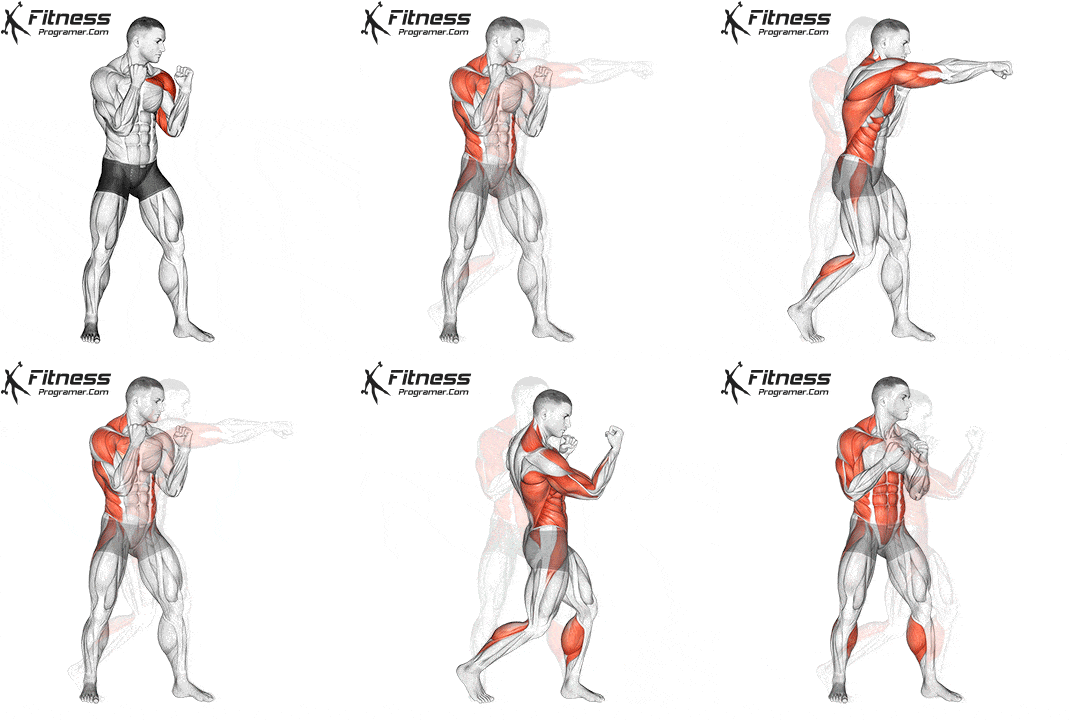
Conditioning That Actually Transfers to Fighting
Good conditioning is more than just random high-intensity circuits that leave you lying on the floor. It’s about training the relevant energy systems so you can repeatedly produce high-quality efforts across rounds, not just survive. A balanced approach works across three main intensity zones: low intensity, moderate intensity, and high intensity. Each zone has its benefits, from building your aerobic base to developing your ability to sustain a pace under fatigue and increasing your ability to explode when needed.
1. Low Intensity – Building the Engine
Steady, low-intensity work builds your aerobic base, improving your recovery between exchanges and rounds, lowering your heart rate for the same work output, and increasing your ability to handle higher volumes of training.
2. Moderate Intensity – Learning to Grind
Tempo runs, controlled circuits, and moderate-intensity intervals develop your ability to sustain a pace under fatigue, improve your capacity to buffer and clear lactate, and prepare you for extended grappling exchanges or high-pressure rounds where you can’t back off.
3. High Intensity – Short, Sharp Bursts
Short sprints, high-intensity intervals, and brief bursts near max effort build your top end, increasing your ability to explode when needed and supporting finishing power – whether that’s a flurry, a takedown attempt, or a decisive scramble.
Mobility: The Quiet Key to Longevity
Mobility isn’t just about being bendy; it’s about being able to move freely and efficiently through the ranges your sport demands. Poor mobility can waste energy, limit your ability to generate power, and increase injury risk when you’re forced into awkward positions. Areas every fighter should look after include the spine, ankles, hips, and shoulders. Consistent, targeted work around these key joints can pay off hugely in technique, power transfer, and career length.
Organising Your Week: The High–Low Approach
The classic fighter mindset is “go hard or go home” – every day, every session. However, this approach can lead to burnout and decreased performance. A better approach is the High–Low Training Method, which alternates demanding, high-intensity days with lower-intensity days that focus on quality movement, technical work, and recovery. This structure lets your nervous system recover between big efforts, allowing you to perform at a high level when you need to.
Recovery: Where the Real Progress Happens
Training is only half of the adaptation process; the other half is what you do outside the gym. Key recovery pillars include sleep, nutrition, hydration, and load management. Ignoring recovery can force you to stop training, while respecting it can help your training accumulate and move you forward. Aim for consistent, high-quality sleep, eat enough to fuel training and recover, and use deload weeks, rest days, and smart tapers before competition.
Key Principles to Train By
There’s no single “magic” exercise or secret circuit that turns you into a great fighter. What works is doing the fundamentals well, over time, with intent. Build a solid base of strength to support power, train speed and direction change so that strength can be utilized quickly and in all planes, condition across a range of intensities, keep mobility and joint health a priority, and recover like it matters. By following these principles, you’ll move sharper, hit harder, and stay in the sport longer.
Learn more about strength and conditioning for combat sports and martial arts Here
Image Credit: fitnessprogramer.com